 Hard Hat Way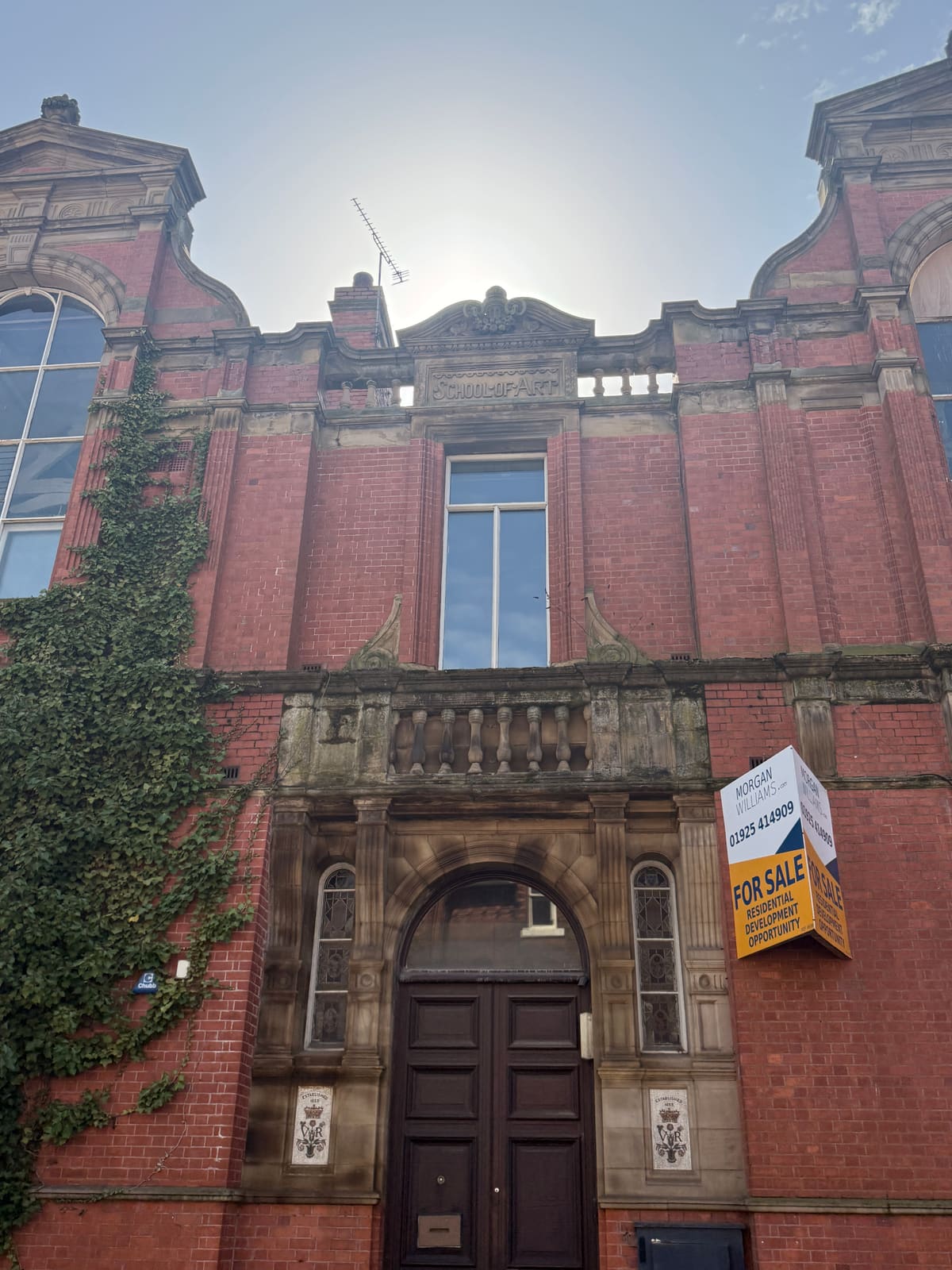
#LookUpHistory · Warrington
School of art
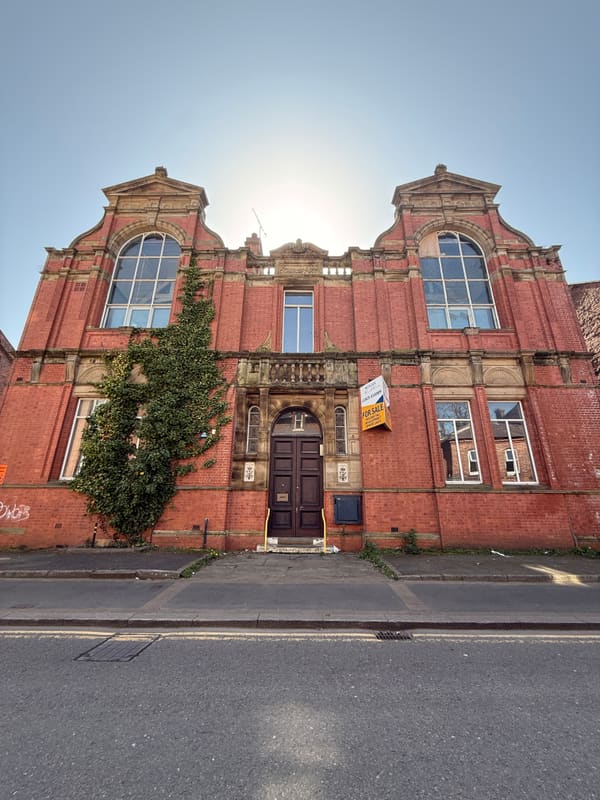
This striking red brick and sandstone building on Museum Street in Warrington town centre is the former Warrington School of Art — one of the earliest purpose-built art schools in the North West of England.
The school itself was founded in 1853 during the reign of Queen Victoria, set up by the Warrington Mechanics Institute with a simple mission: teach young artists the skills they needed to find work in industry. At the time, Britain was deep in the Industrial Revolution and towns like Warrington were booming. There was real demand for people who could design, draw and apply artistic skill to manufacturing — and the Mechanics Institutes across the country stepped up to fill that gap.
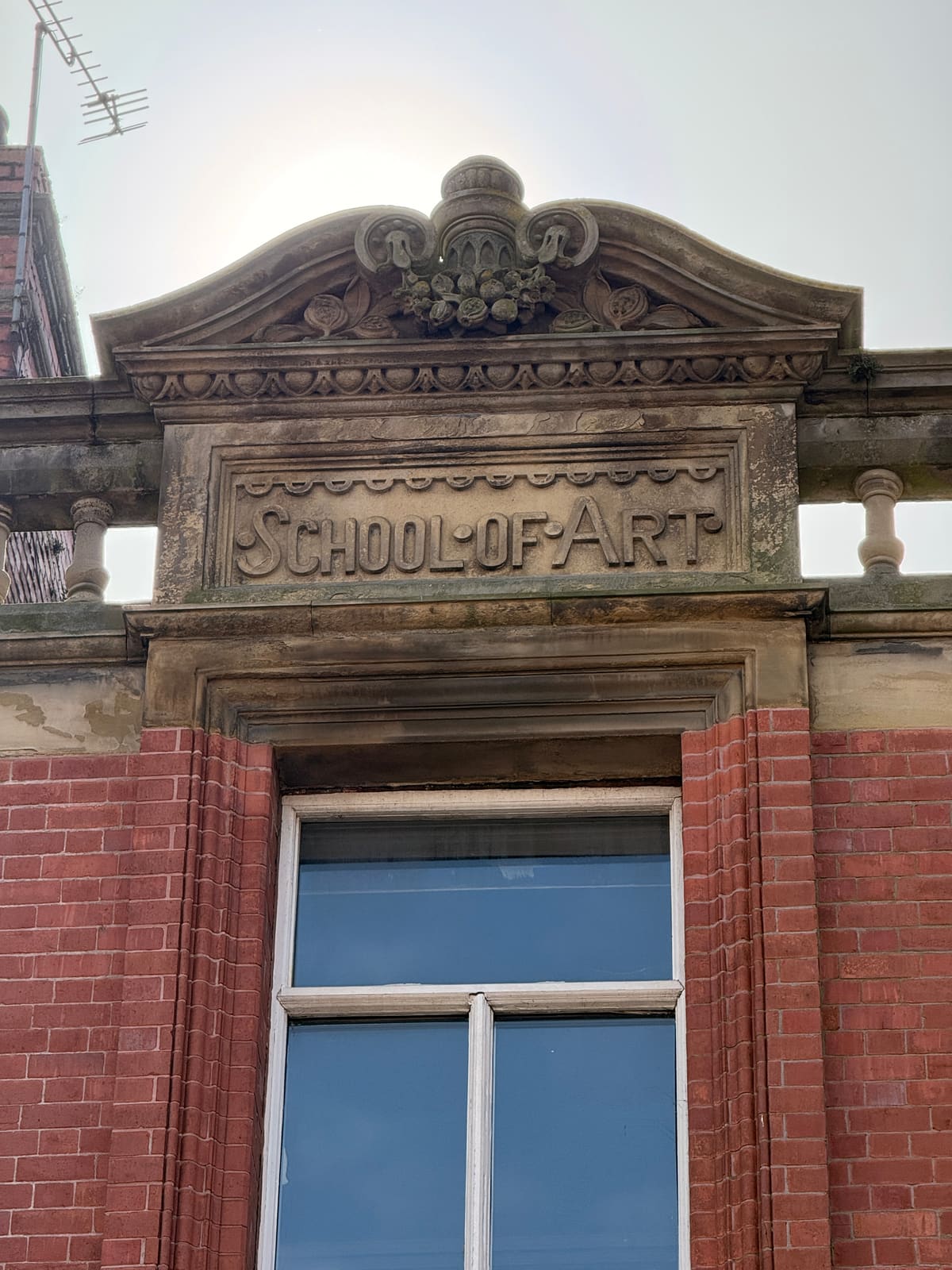
For its first three decades the school operated inside the Warrington Museum & Art Gallery building just across the road on Bold Street. But by 1877 it had outgrown the space, and in 1884 it finally moved into this purpose-built home — the building that still stands today.
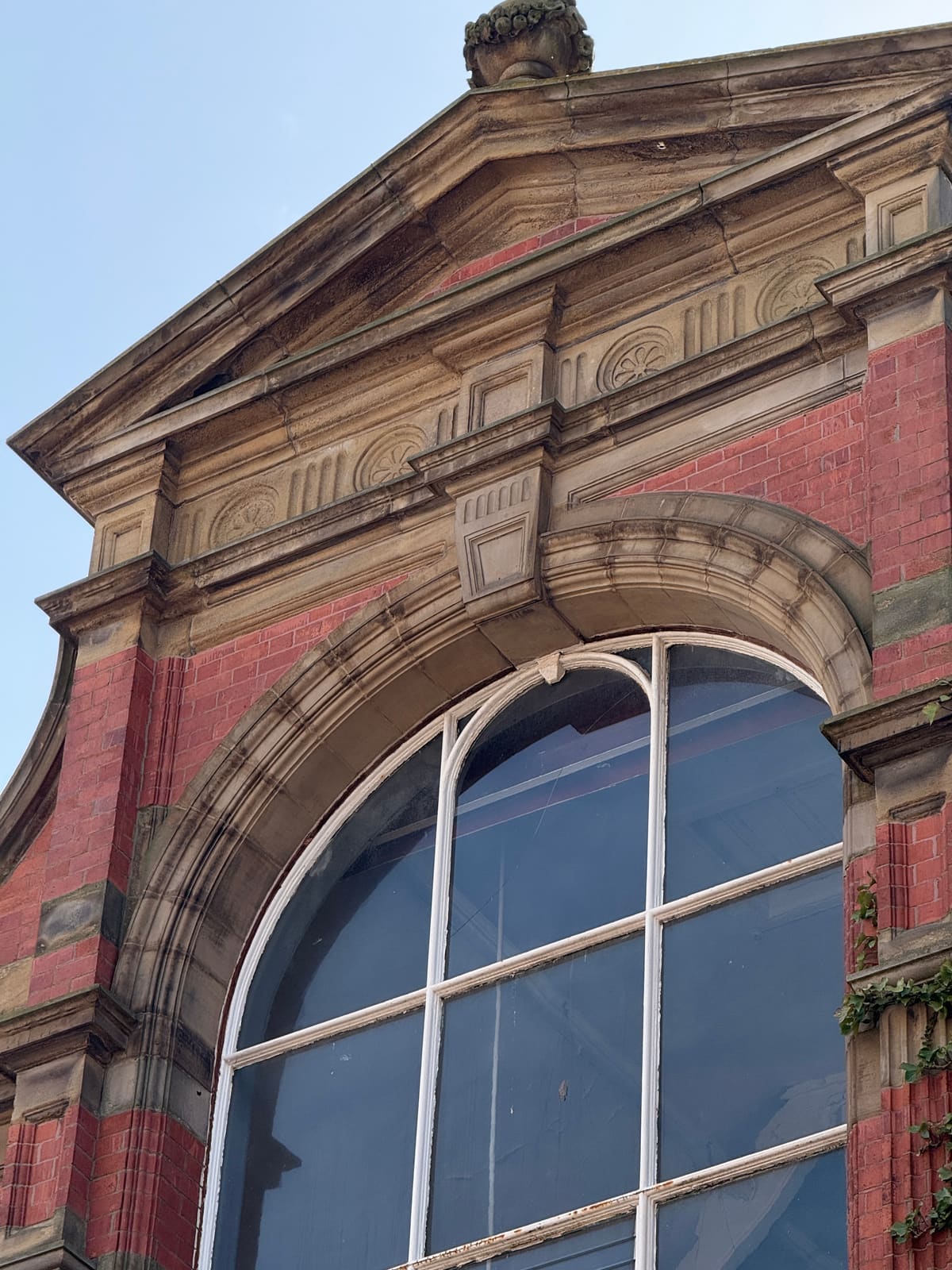
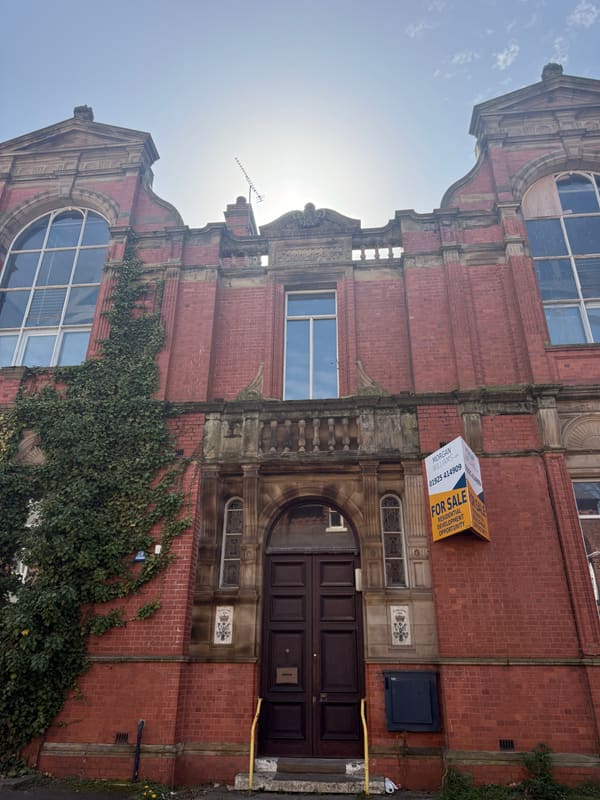
Look closely and you can read the craftsmanship. “SCHOOL OF ART” is carved into the sandstone pediment above the first floor window, crowned with a classical broken pediment and decorative floral urn. Either side of the grand arched entrance sit mosaic tiles bearing the royal cipher “VR” — Victoria Regina — beneath a crown, with “Established 1853” set in fine tilework. The entrance itself features leaded stained glass side panels, heavy timber doors, and ornate sandstone mouldings with column detailing. The upper floors show large arched studio windows — designed to flood the interior with natural light for the artists working inside. Fan motifs, balustrading, and baroque scrollwork run across the facade. Every inch of it was built with intention.
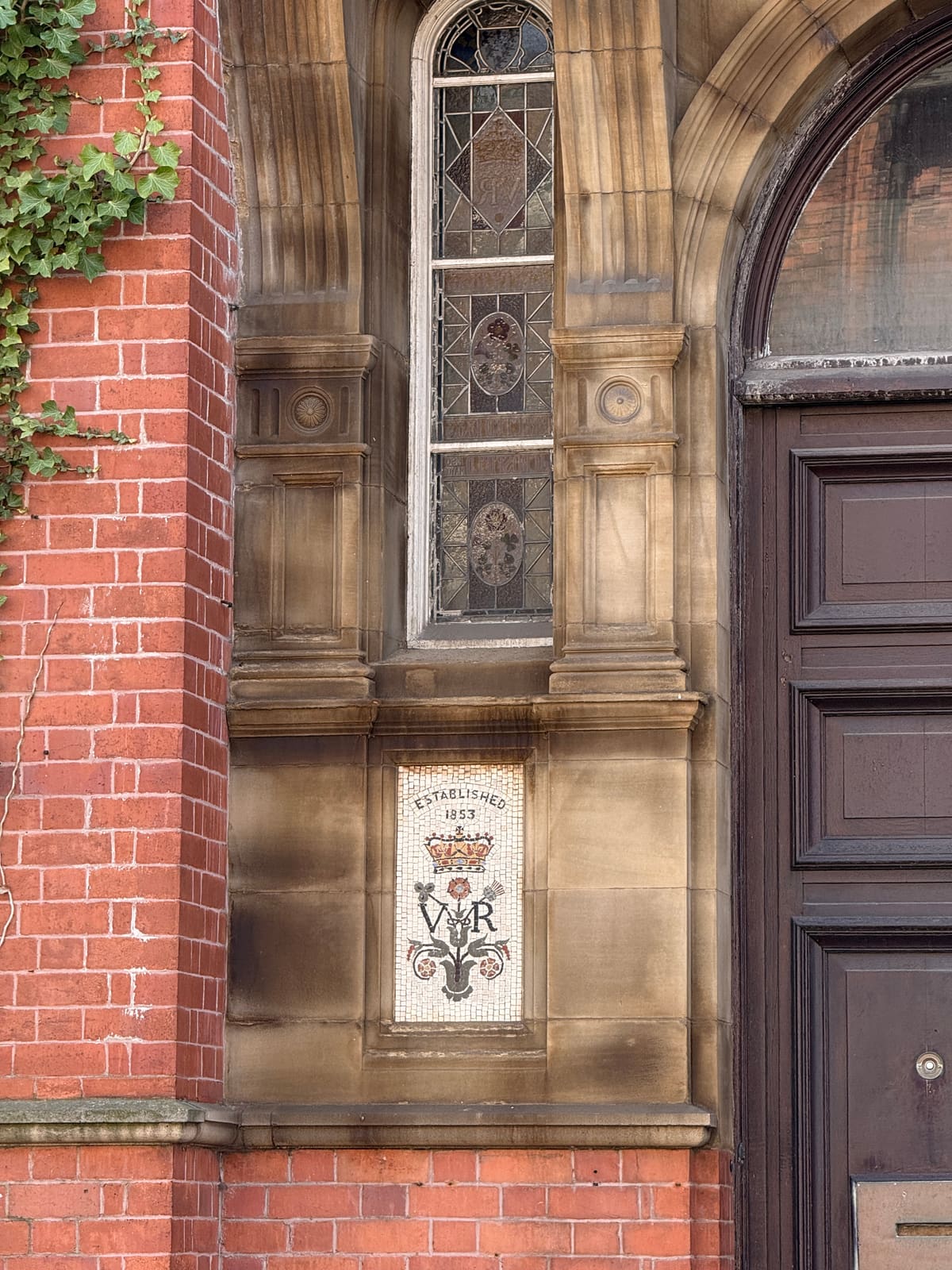
The quality of the brickwork alone tells you something. Clean, tight joints. Consistent colour. Decorative courses integrated with the stonework rather than fighting it. This was a time when the bricklayer, the stonemason and the architect worked as one to produce something that wasn’t just functional — it was meant to inspire the people walking through the door.
And it did. The school produced some remarkable talent. Luke Fildes trained here before going on to illustrate the works of Charles Dickens, eventually becoming a member of the Royal Academy. The sculptor John Warrington Wood also came through these doors — he went on to carve a fifteen-ton marble statue of the Archangel Michael slaying Satan, which was commissioned specifically for display in the Warrington Museum art gallery across the street.
Today the building sits empty. A “For Sale” sign from Morgan Williams hangs on the front, advertising it as a residential development opportunity. The ivy is creeping up the left side. But the bones are still there — the stonework, the glass, the brickwork, the proportions. Over 140 years old and still standing with more character than most things built last week.
Buildings like this deserve more than a passing glance. They’re the physical proof of what skilled tradespeople and civic ambition could produce when they worked together. Next time you walk past something like this, stop. Look up. There’s always a story.
More photos
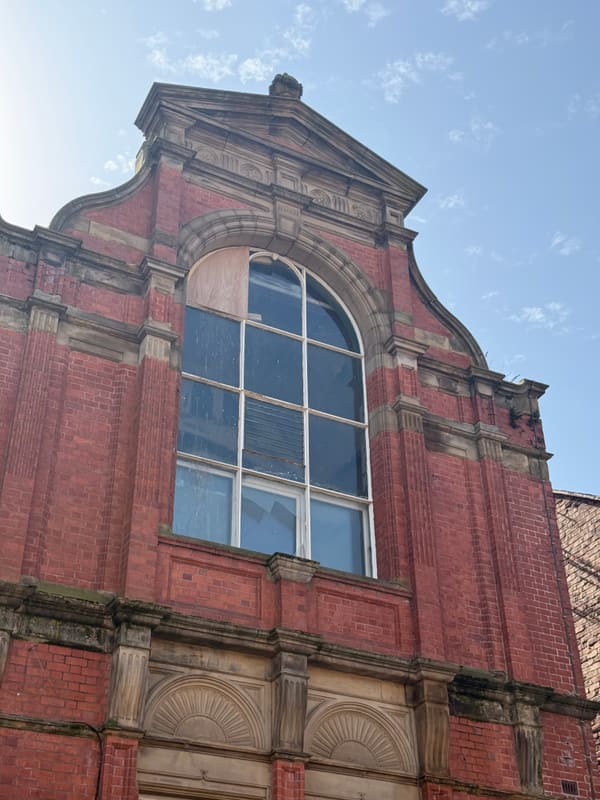
Go and look up
School of art, Warrington
There’s more in the app
- Listen to every story, read out
- Get told the day a new building goes up
- Tick off the ones you’ve stood in front of
- Suggest a building in your town
Got an old building of your own?
Old stone and old brick need a trade who knows how they were put up. Post the job free and trades near you see it straight away.