 Hard Hat Way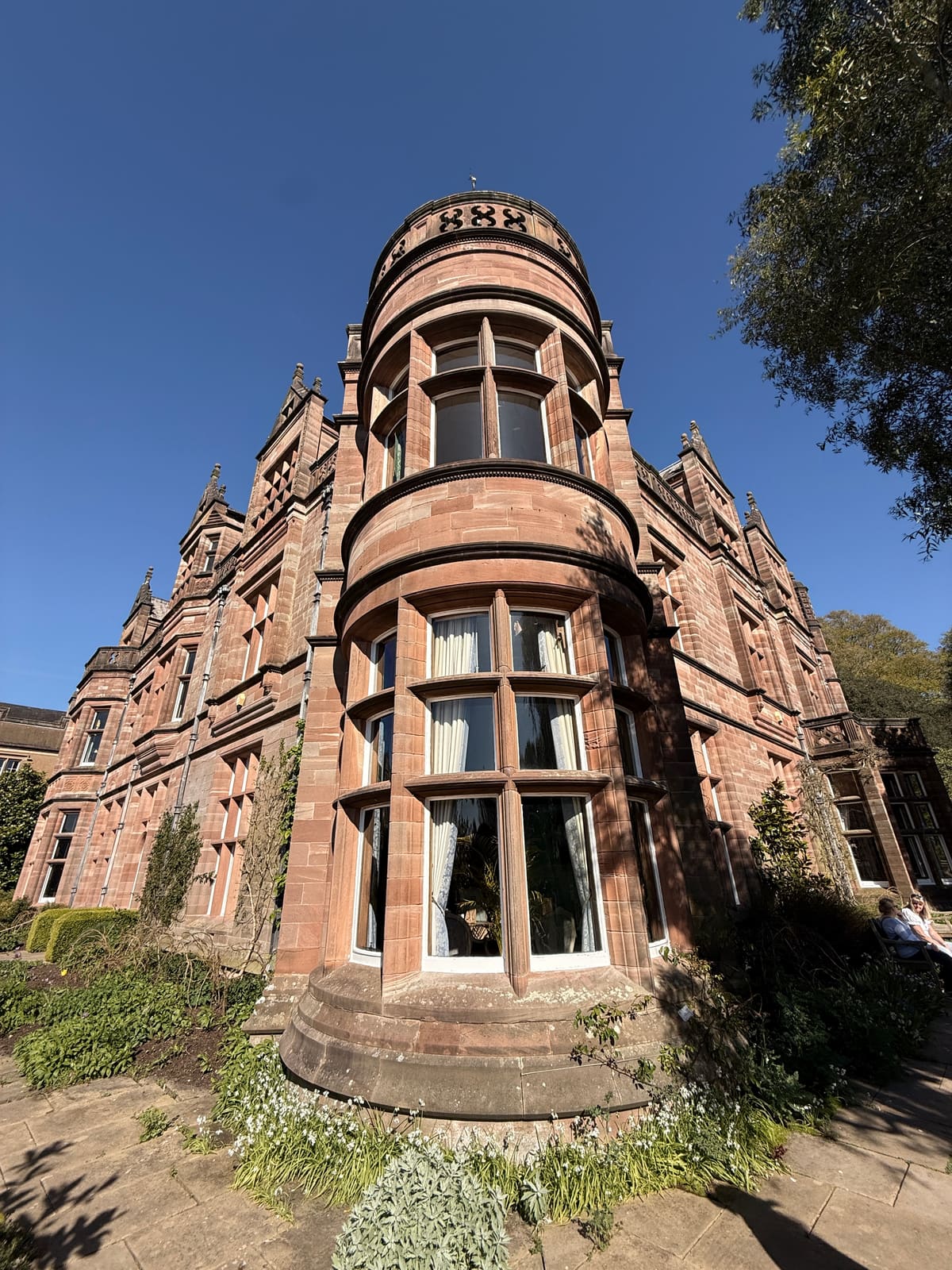
#LookUpHistory · Cumbria
Holker Hall
Most people walk up to a place like this and see a big old posh house. Grand. Old. Not theirs. They take the photo, they move on.
I want you to stop and actually look. Because what you’re standing in front of isn’t just a grand old house. It’s a building that burned to the ground — and got built back better. Every wall in front of you is somebody refusing to give up.
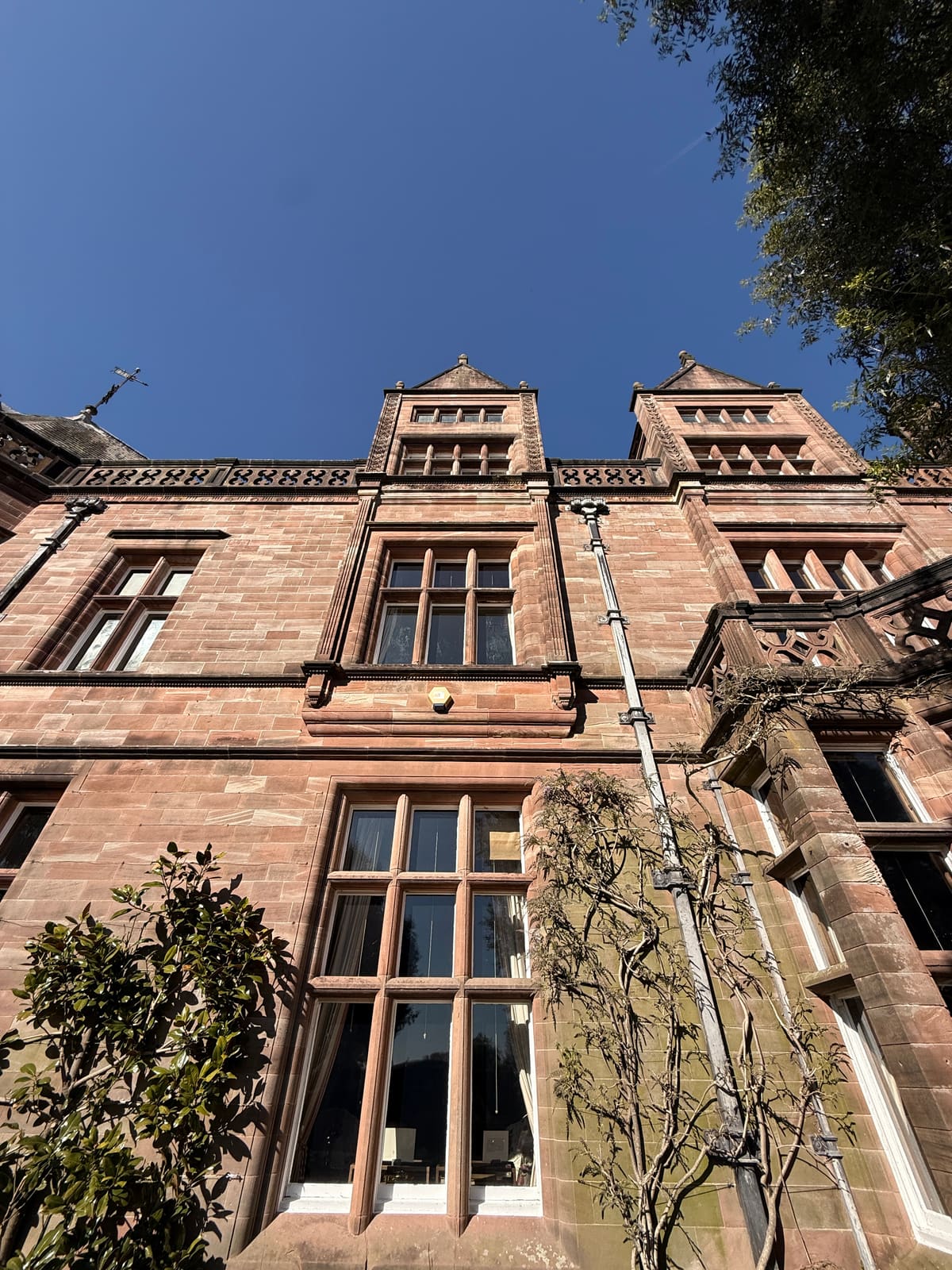
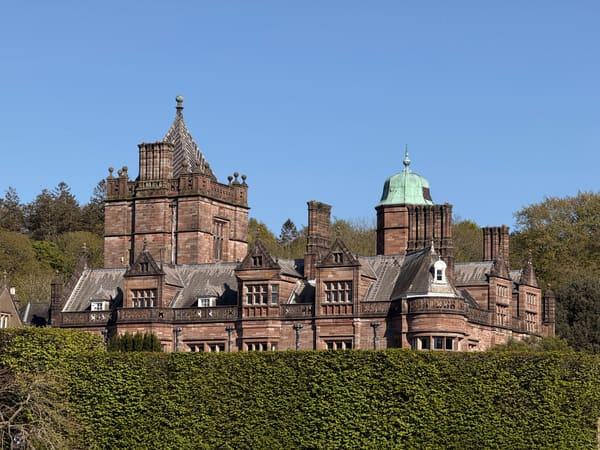
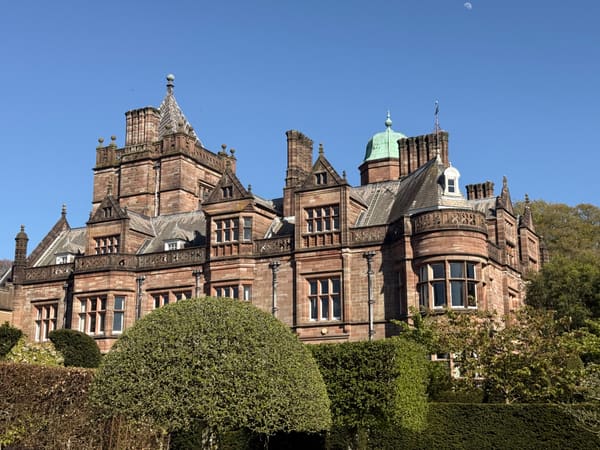
This is Holker Hall, down near Cartmel in Cumbria, right on the edge of the Lakes. The Cavendish family have owned it for over four hundred years and never once sold it. But the wing you’re looking at — the showpiece, the red sandstone front with the towers and the carving — that part’s younger than the rest. And there’s a reason for that.
In 1871 a fire ripped through the west wing and gutted it. Took the lot. Paintings, the lot of it, gone. Now most families, faced with that, would’ve patched it up quietly and moved on. The 7th Duke of Devonshire looked at the ashes and decided he was going to build it back grander than it was before. He brought in two architects out of Lancaster, Paley and Austin, and told them to do it properly. And they did. Nikolaus Pevsner — the man who went round and catalogued every building in England worth cataloguing — called the result the best Elizabethan Gothic in the north of the country. Born straight out of a disaster. Remember that the next time something of yours burns down.
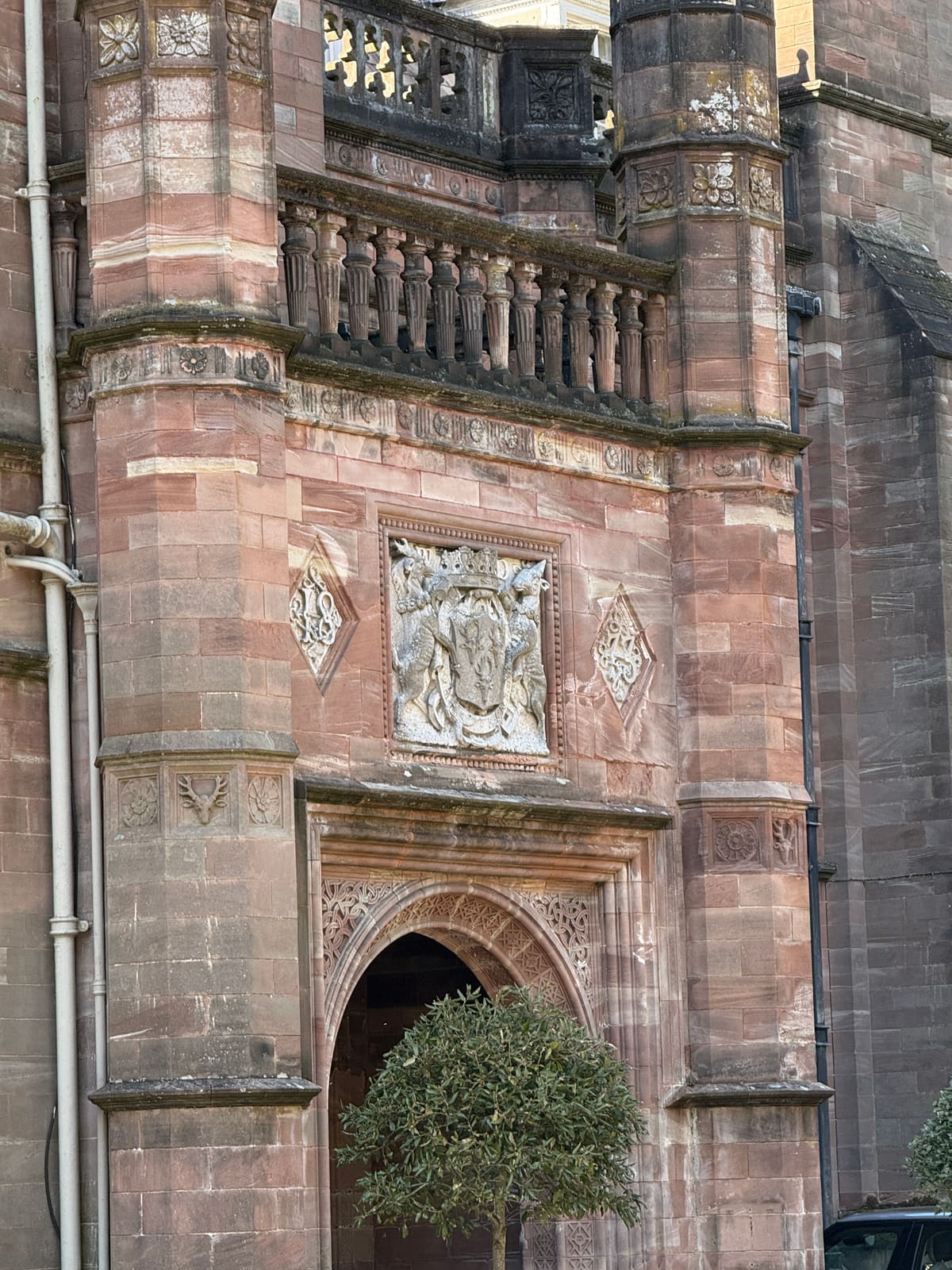
Now get closer, because this is where it gets good.
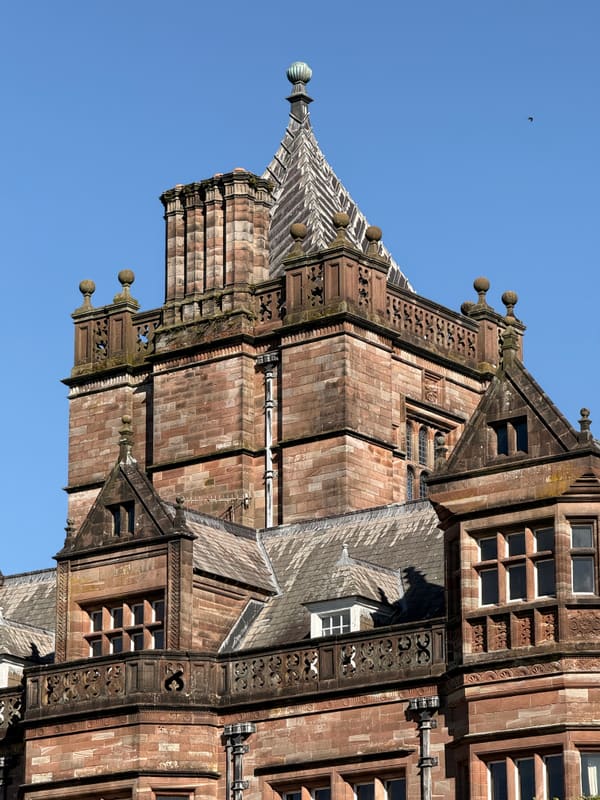
It’s all red sandstone, and every block of it was dressed by hand. Look at the corners — the quoins — and the courses running up the tower. See how tight those joints are? You’d struggle to slide a knife blade between them. There were no power tools doing that. No cutting discs, no grinders. Every single one of those blocks was worked to a template by a banker mason, sat at his bench with a chisel and a mallet and an eye, before it ever went up the wall. Hundreds of them. Thousands. One at a time. That’s what “built to last” actually means when you say it out loud.
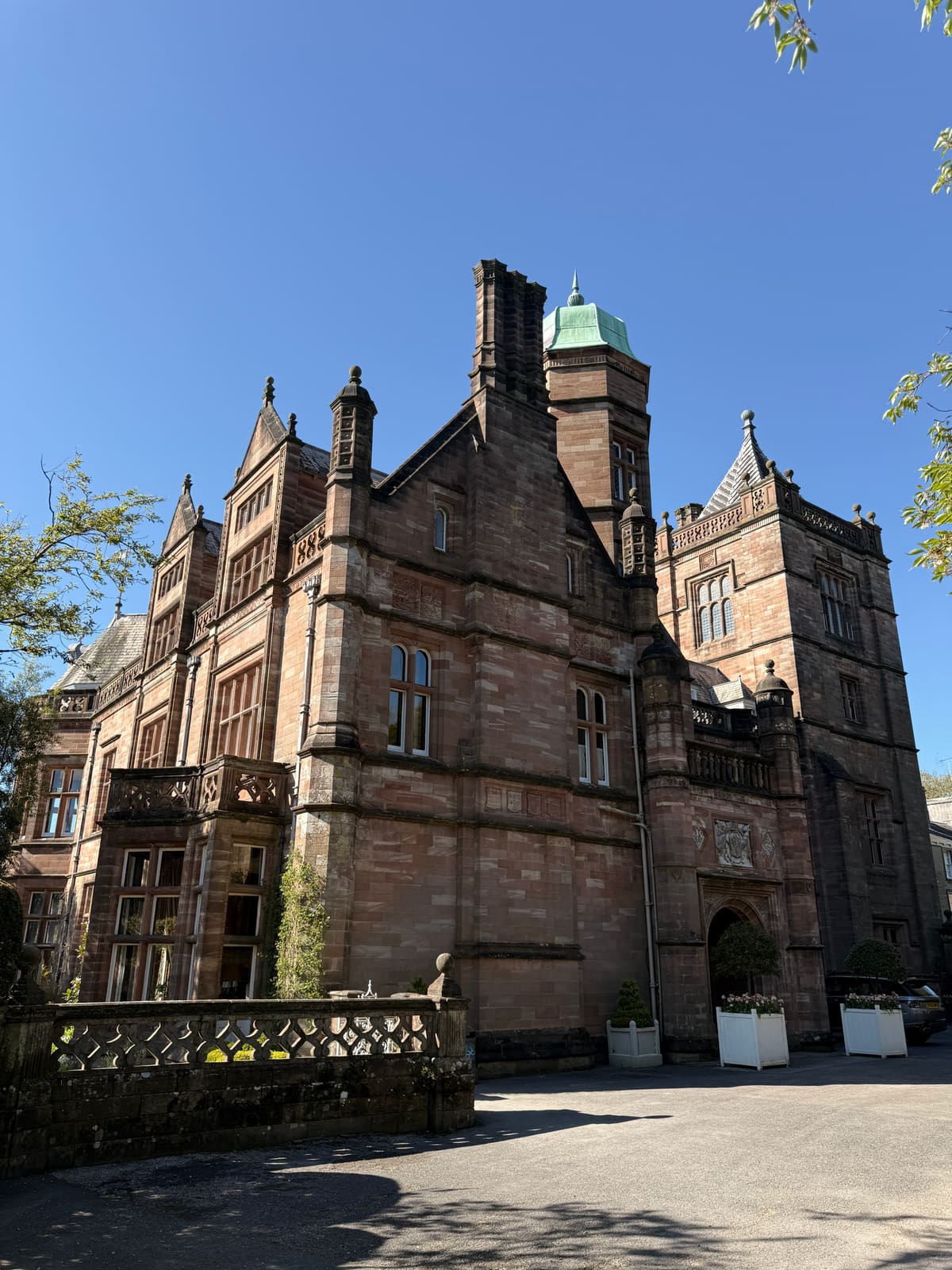
Then there’s the carving, and that’s where the money really shows. Look at the doorway — that knotwork, the strands all woven over and under each other, and the star patterns running up the arch above it. Every one of those strands is undercut. That means the carver didn’t just scratch the pattern on, he took the stone back behind it, layer by layer, so it sits proud and throws a shadow and reads from all the way down on the ground. And here’s the thing about carving stone — you can’t undo it. Wood you can glue, plaster you can fill. Get a chisel stroke wrong on a block like that and you don’t fix it, you bin the whole stone and start again. So every clean line you’re looking at is somebody holding their nerve.
See the panel up high with the three stags’ heads on it? That’s the Cavendish family’s coat of arms, their mark, framed by a crown with a stag on one side and a griffin on the other holding it up. The two diamond shapes either side of it read eighteen — ninety. Eighteen-ninety. That’s the year they signed off the work, carved into the front of the building so there’d be no argument about it. A house doesn’t put its own name up in stone like that unless it fully intends to be remembered.
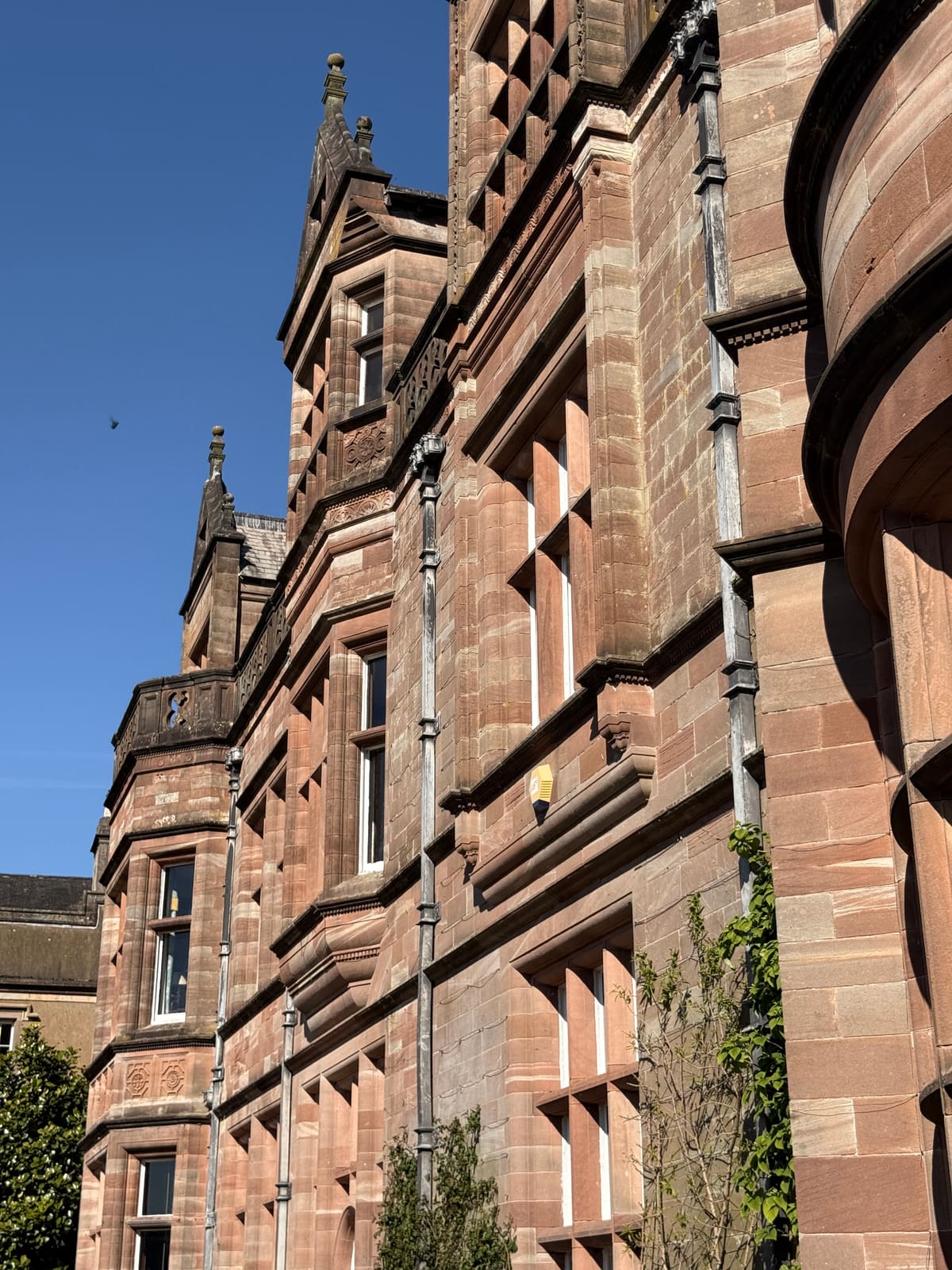
But here’s the bit that actually gets me. Look right up at the top. The chimneys. Most people never look that high in their lives. Even the chimney stacks are sculpture up there — carved, stepped caps, the lot. And here’s the question nobody asks: who was ever going to see those? Nobody on the ground. Nobody walking past. You’d need to be a bird or a steeplejack. And they carved them beautifully anyway. That’s the whole thing, right there, in one detail. You do the job properly whether anyone’s watching or not. That’s not about the Duke and it’s not about showing off. That’s a craftsman who couldn’t put his name to anything less.
I’ll give you the honest ending though, because there always is one. Red sandstone is a dream to carve — it’s soft, it’s even, it takes fine detail like almost nothing else can. But soft cuts both ways. Look at the weathered faces, the edges that have gone soft and crumbly. That’s a hundred and fifty years of Cumbrian rain having a go at it, day in, day out. They built it to be looked at, and the weather’s been quietly trying to wear it back down to nothing ever since. And it’s still winning. Just about.
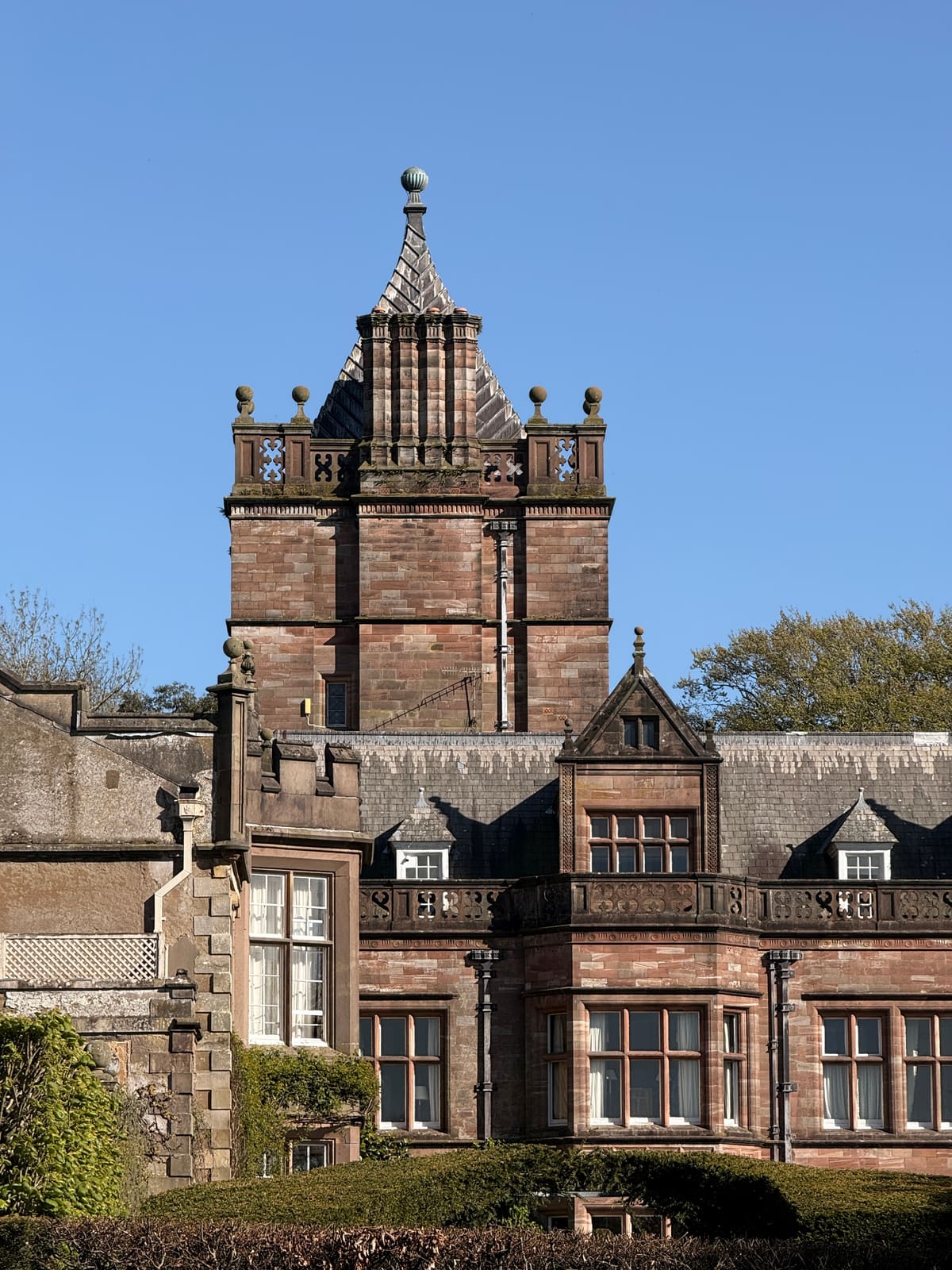
So next time you go past a building like this one — and there’s one in every town, I promise you — do me a favour and look up. There’s a fire in that wall. There’s a family that wouldn’t quit. And there’s a small army of men who’ll never have their names on a single stone of it, who carved chimneys that nobody would ever see, simply because it was the right way to do the job.
Pride and quality. Every single block.
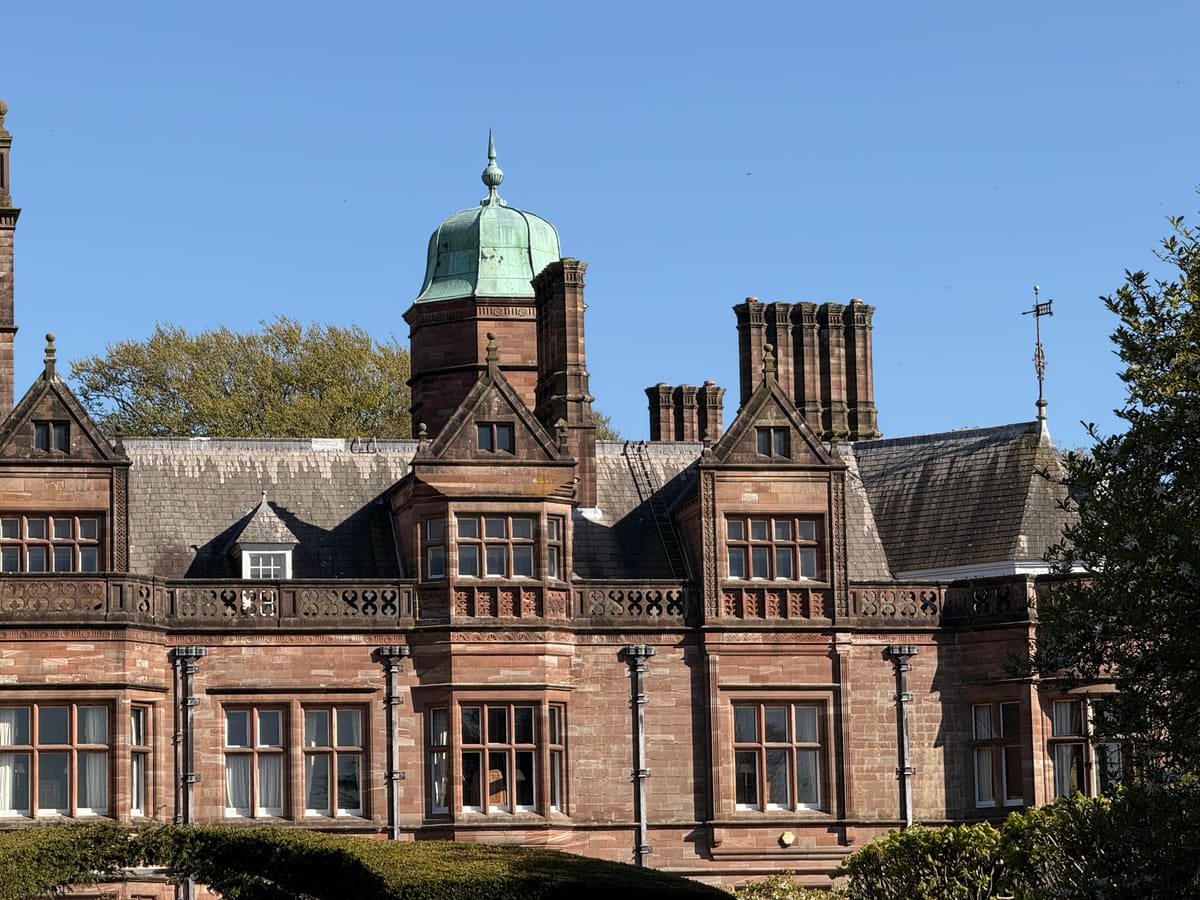
Look up.
More photos
Go and look up
Holker Hall, Cumbria
There’s more in the app
- Listen to every story, read out
- Get told the day a new building goes up
- Tick off the ones you’ve stood in front of
- Suggest a building in your town
Got an old building of your own?
Old stone and old brick need a trade who knows how they were put up. Post the job free and trades near you see it straight away.